







Having a baby is one of the most predictable large medical expenses you can plan for — which makes understanding your maternity coverage ahead of time genuinely valuable. Knowing what’s covered, what you’ll owe, and what to do the moment your baby arrives can save you thousands and a lot of stress during an already busy season.
This guide explains how maternity coverage works in Idaho health plans, what it typically costs you out of pocket, and the timing steps that protect both mom and baby.
Maternity Care Is an Essential Benefit
Every major medical plan sold through Your Health Idaho must cover maternity and newborn care — it’s one of the ACA’s essential health benefits. That means you can’t be denied or surcharged for being pregnant, and the core services are covered on any compliant plan.
Typical maternity coverage includes:
- Prenatal care — regular checkups, screenings, and labs
- Labor and delivery — hospital or birth-center facility and provider fees
- Postpartum care — follow-up visits for mom
- Newborn care — your baby’s first checkups and screenings
One exception to watch: short-term plans are not required to cover maternity and usually don’t. If pregnancy is on the horizon, a comprehensive plan is essential.

What It Actually Costs You
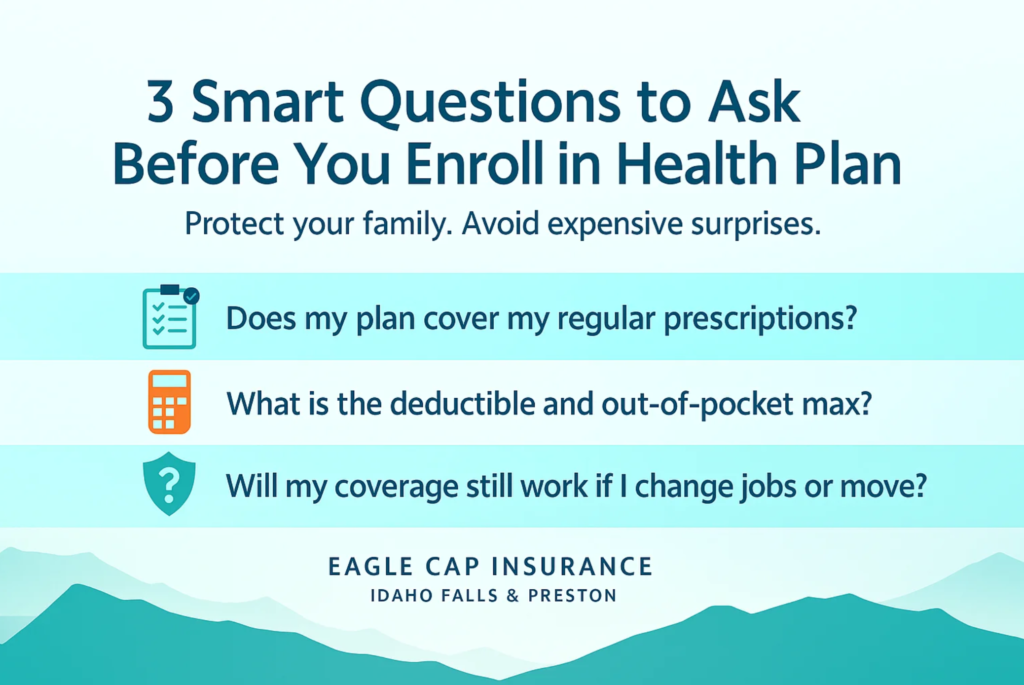
“Covered” doesn’t mean free — it means cost-sharing applies. Your out-of-pocket cost for a pregnancy depends on your plan’s deductible, coinsurance, and out-of-pocket maximum. Because a birth is a large claim, many families hit their out-of-pocket maximum in the delivery year — which is exactly why that number matters so much when comparing plans.
A practical move: if you’re planning a pregnancy, choose a plan with a lower out-of-pocket maximum even if the premium is a bit higher. The math usually favors it in a delivery year.
Confirm Your Providers and Hospital
Make sure your OB-GYN, midwife, and intended delivery hospital are all in-network before you’re far into the pregnancy — an out-of-network delivery is one of the most common sources of surprise maternity bills. Our guide to choosing in-network providers walks through how to verify each one.
The Timing Step That Protects Your Baby
A birth is a qualifying life event. That triggers a special enrollment period, giving you a window (typically 60 days) to add your newborn to your plan or switch to better-fitting coverage. Add your baby promptly so their care is covered from day one — and remember a new dependent can also change your premium tax credit.
For the bigger picture on covering a growing household, see our guide to coverage for growing families.

Call (208) 529-1522 or visit eaglecapinsurance.com and we’ll help you choose a plan that covers your pregnancy well, confirm your OB and hospital are in-network, and make sure your newborn is added on time. No cost to you.
Frequently Asked Questions
Is maternity care covered by Idaho health insurance?
Yes. Every major medical plan sold through Your Health Idaho must cover maternity and newborn care as an essential benefit, including prenatal care, labor and delivery, postpartum care, and the newborn's first care.
How much does having a baby cost with insurance?
Covered does not mean free. Your cost depends on the plan's deductible, coinsurance, and out-of-pocket maximum, and many families reach their out-of-pocket maximum in the delivery year, so that number matters most.
Do I need to add my newborn to my plan?
Yes, and promptly. A birth is a qualifying life event that opens about a 60-day window to add your baby so their care is covered from day one, and it may also change your premium tax credit.
Do short-term plans cover pregnancy?
Usually not. Short-term plans are not required to cover maternity and typically do not, so if pregnancy is on the horizon, a comprehensive plan is essential.
About the author — Kyle Bennett, Principal & Licensed Insurance Agent, Eagle Cap Insurance, Ammon, ID. Kyle helps expecting Idaho families prepare their coverage before baby arrives, serving eastern Idaho from Idaho Falls (Ammon) and Preston.