








Insurance has a language all its own, and the jargon can make simple ideas feel complicated. This glossary translates the terms Idaho clients ask about most into plain English — bookmark it and refer back whenever a policy or quote throws an unfamiliar word at you.
We’ve grouped the terms by topic so they’re easy to scan.
Cost & Payment Terms
- Premium — what you pay (usually monthly) to keep coverage active, whether or not you use it.
- Deductible — the amount you pay out of pocket before the plan starts sharing costs.
- Copay — a fixed dollar amount for a specific service (e.g., $30 per doctor visit).
- Coinsurance — your percentage share of a cost after the deductible (e.g., you pay 20%, the plan pays 80%).
- Out-of-pocket maximum — the most you’ll pay for covered care in a year; after this, the plan pays 100%.
Understanding Essential Insurance Terms for Idaho Clients
- Coverage limit — the maximum amount a policy will pay for a covered loss.
- Exclusion — something the policy specifically does not cover.
- Endorsement / rider — an add-on that modifies or adds to your base policy.
- Essential health benefits — categories of care (like maternity and mental health) that ACA plans must cover.
- Pre-existing condition — a health condition you had before coverage began; ACA plans can’t deny or surcharge for these.

Health Insurance Terms
- Network — the doctors, hospitals, and pharmacies that contract with your plan for lower rates.
- In-network / out-of-network — whether a provider is part of your plan’s network; out-of-network usually costs much more.
- HMO — a plan that keeps you in-network and often requires referrals; lower cost, less flexibility.
- PPO — a plan with out-of-network flexibility; higher cost, more choice.
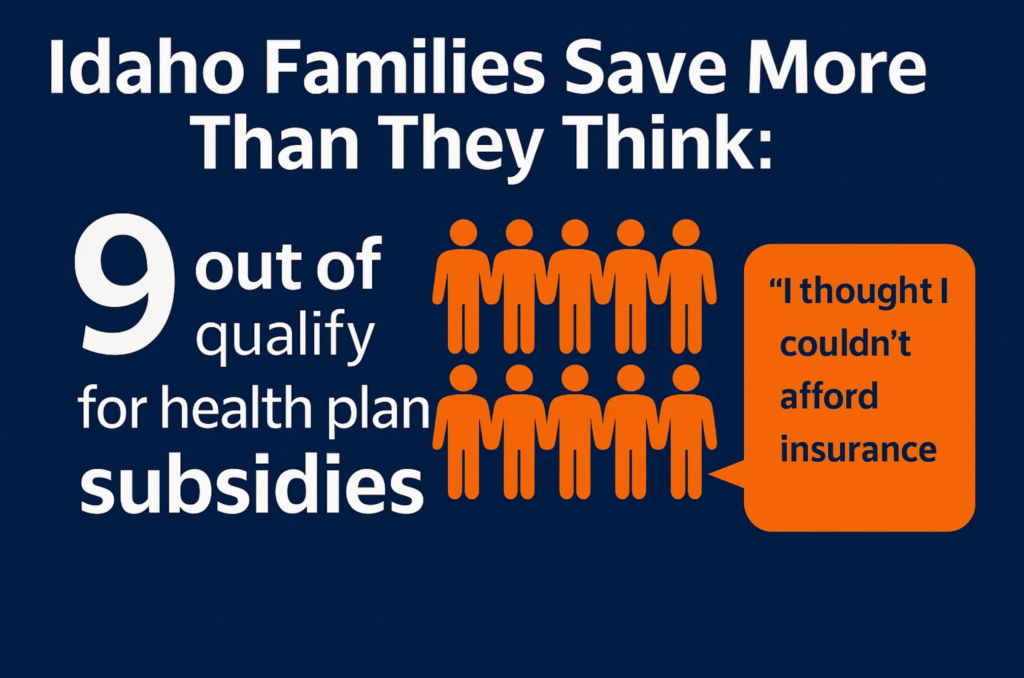
- Premium tax credit (subsidy) — income-based financial help that lowers your monthly marketplace premium.
- Formulary — the list of prescription drugs a plan covers, organized by cost tiers.
For deeper health coverage guidance, see our health insurance resources.
Life Insurance Terms
- Death benefit — the amount paid to your beneficiaries when you pass away.
- Beneficiary — the person or entity you name to receive the death benefit.
- Term life — coverage for a set number of years, with no cash value.
- Whole / universal life — permanent coverage that builds cash value.
- Cash value — the savings component in a permanent policy you can borrow against.
Learn more on our life insurance page.
Liability & Business Terms
- Liability — legal responsibility for injury or damage to others; liability coverage pays those claims.
- General liability — business coverage for third-party injury or property damage claims.
- Workers’ compensation — coverage for employee work-related injuries; required for most Idaho employers.
- Claim — a formal request to your insurer for payment under your policy.
- Underwriting — the process insurers use to assess risk and set your price.

Frequently Asked Questions
What is the difference between a copay and coinsurance?
A copay is a fixed dollar amount you pay for a service, like $30 for a doctor visit. Coinsurance is a percentage of the cost you pay after meeting your deductible, like 20% of a bill. Both are forms of cost-sharing.
What does out-of-pocket maximum mean?
The out-of-pocket maximum is the most you’ll pay for covered care in a plan year. After you reach it, the plan pays 100% of covered services. It is your financial safety net against a catastrophic year.
What is a premium?
A premium is the amount you pay to keep your insurance active, usually monthly. You pay it whether or not you use any care or file any claim.
What is a beneficiary?
A beneficiary is the person or entity you name to receive a life insurance death benefit. You can name primary and contingent (backup) beneficiaries and should keep them updated after major life events.
Call (208) 529-1522 or visit eaglecapinsurance.com/contact and we’ll explain any insurance term in plain English and make sure your coverage matches what you actually need. No jargon, no pressure.
About the author — Kyle Bennett, Principal & Licensed Insurance Agent, Eagle Cap Insurance, Ammon, ID. Kyle is a licensed independent insurance agent and the principal of Eagle Cap Insurance, translating insurance into plain English for Idaho clients, serving eastern Idaho from Idaho Falls (Ammon) and Preston.