







College is one of those transitions where health insurance quietly falls through the cracks. A student feels invincible, the parents assume someone’s handling it, and then an unexpected illness or injury turns into a bill no one planned for. The good news: Idaho students have several solid, affordable options — you just need to pick the one that fits.
This guide lays out the realistic health insurance choices for Idaho college students and the trade-offs of each.
Option 1: Stay on a Parent’s Plan (Until 26)
For most students, this is the simplest and often cheapest route. Federal rules let dependents stay on a parent’s health plan until age 26, regardless of whether they’re in school, living at home, or financially independent.
The one thing to check: network coverage where the student lives and studies. If they attend school far from home, confirm there are in-network providers near campus — see choosing in-network providers. A plan that’s great at home but has no network near campus can leave a gap.
Option 2: A Marketplace Plan of Their Own
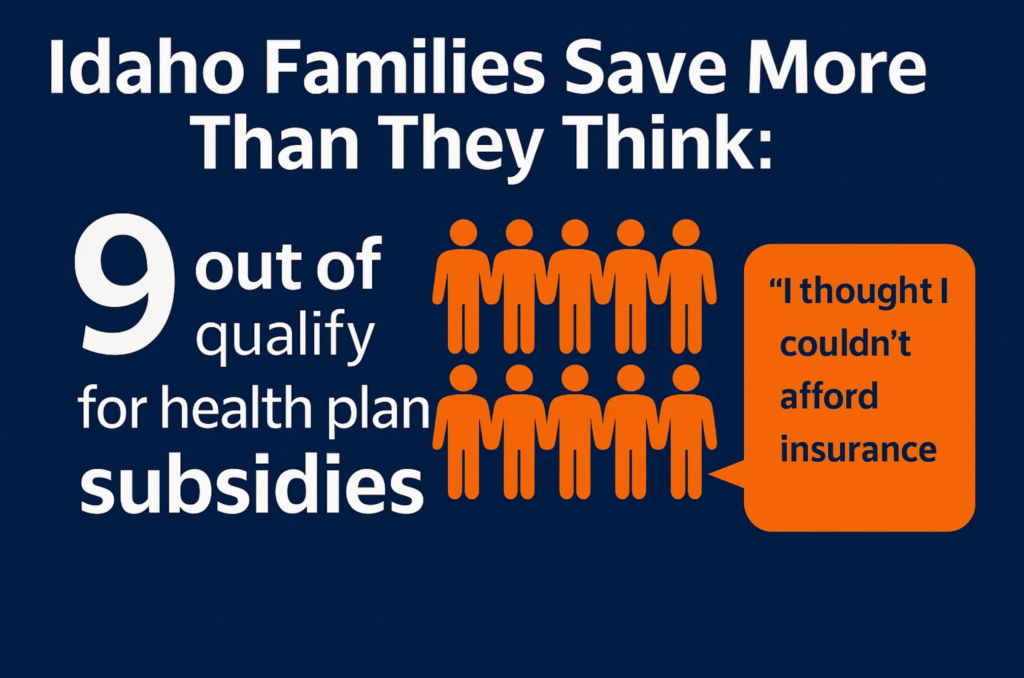
If staying on a parent’s plan isn’t ideal — say the student lives in a different part of Idaho with a different provider network — an individual plan through Your Health Idaho may fit better. Students with little or no income often qualify for a substantial premium tax credit, making their own plan surprisingly affordable.

Option 3: Medicaid
A student with low personal income may qualify for Idaho Medicaid, which provides comprehensive coverage at little or no cost. Eligibility is based on income and household, and it’s worth checking — many students qualify and don’t realize it.
Option 4: Student Health Plans
Some colleges offer their own student health plans. These can be convenient and campus-centered, but compare carefully: coverage, network, and cost vary widely, and they may be thinner than a marketplace plan or a parent’s plan. Treat it as one option to weigh, not an automatic choice.

What About Short Gaps?
If a student is between coverage — graduated, aged off a plan, or waiting for new coverage to start — a short-term plan can bridge a few months. Just remember short-term plans don’t cover pre-existing conditions or all essential benefits, so it’s a bridge, not a destination.
How to Choose
- Where will the student get care — and are there in-network providers there?
- What’s the total cost — premium plus expected use, after any subsidy?
- Any specific needs — ongoing prescriptions, mental health care, a chronic condition?
Answer those and the right option usually becomes obvious. If not, that’s what we’re here for.
Call (208) 529-1522 or visit eaglecapinsurance.com and we’ll help your student find coverage that works where they live and study — and check whether they qualify for a subsidy or Medicaid. Free, local, no pressure.
Frequently Asked Questions
Can a college student stay on a parent's health plan?
Yes. Federal rules let dependents stay on a parent's plan until age 26, regardless of whether they are in school, living at home, or financially independent. Just confirm there are in-network providers near campus.
What are a student's options if they can't use a parent's plan?
Options include a marketplace plan through Your Health Idaho (often heavily subsidized for low-income students), Idaho Medicaid, or a college's student health plan. Each should be compared on cost and network.
Do students qualify for help paying for a marketplace plan?
Often yes. Students with little or no income frequently qualify for a substantial premium tax credit, which can make their own plan surprisingly affordable, and some qualify for Medicaid.
Is a campus student health plan a good choice?
It can be convenient, but coverage, network, and cost vary widely and may be thinner than a marketplace or parent's plan. Treat it as one option to compare, not an automatic choice.
About the author — Kyle Bennett, Principal & Licensed Insurance Agent, Eagle Cap Insurance, Ammon, ID. Kyle helps Idaho students and families choose practical, affordable coverage, serving eastern Idaho from Idaho Falls (Ammon) and Preston.