


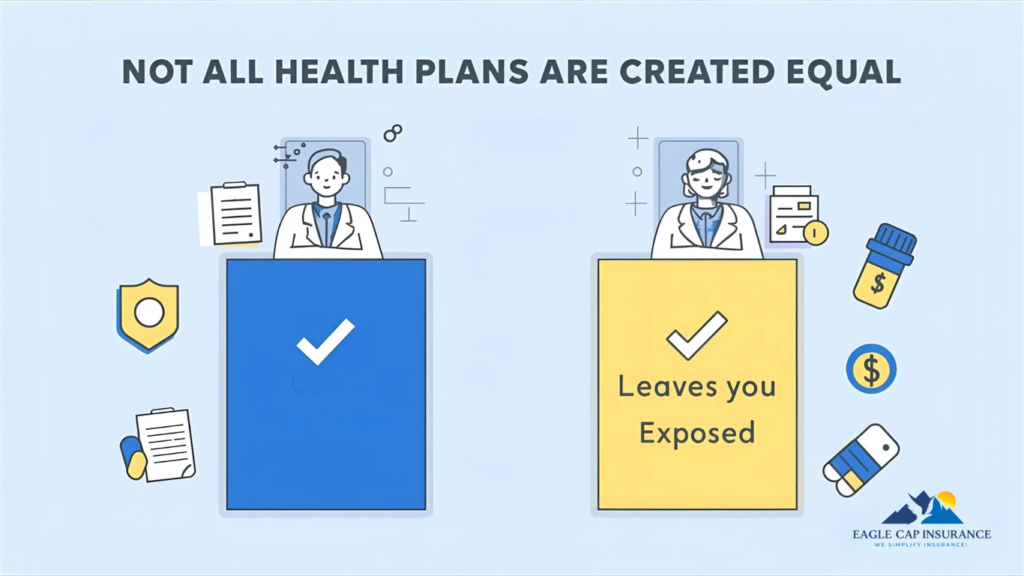



Most people compare health plans the wrong way: they sort by monthly premium and pick the cheapest. It’s an understandable instinct and an expensive mistake. The premium is only one of five numbers that decide what a plan actually costs you — and for many Idaho families, the lowest-premium plan ends up being the most expensive once you add in everything else.
This guide gives you a clear, repeatable framework for comparing Idaho health insurance plans so you can choose based on real cost and real fit, not just the sticker price.
Start With Total Cost, Not Premium
Think of a health plan as having two price tags: what you pay every month (premium) and what you pay when you use care (deductible, copays, coinsurance) up to a ceiling called the out-of-pocket maximum.
A useful estimate of your yearly cost:
Annual premium + expected out-of-pocket costs = your real cost
A low-premium, high-deductible plan can be perfect for someone healthy who rarely sees a doctor — and brutal for a family with a chronic condition or a baby on the way. Use our premium estimator to model this for your situation.
The Five Numbers That Matter
When you line plans up side by side, compare these:
- Monthly premium — what you pay even if you use no care.
- Deductible — what you pay before the plan starts sharing costs.
- Copays/coinsurance — your share after the deductible.
- Out-of-pocket maximum — the most you’ll pay in a year; your worst-case ceiling.
- Subsidy — any premium tax credit that lowers the premium.
The out-of-pocket maximum is the one people overlook, and it’s arguably the most important — it’s your financial protection if something serious happens.

Check the Network Before Anything Else
A plan is only as good as its access to the providers you use. Before comparing prices, confirm your doctors, specialists, and preferred hospitals in Idaho Falls, Pocatello, or Preston are in-network. An out-of-network visit can blow past your cost estimates entirely. Our guide to choosing in-network providers explains how to verify this, and HMO vs. PPO covers how network rules differ by plan type.
Don’t Forget Prescriptions
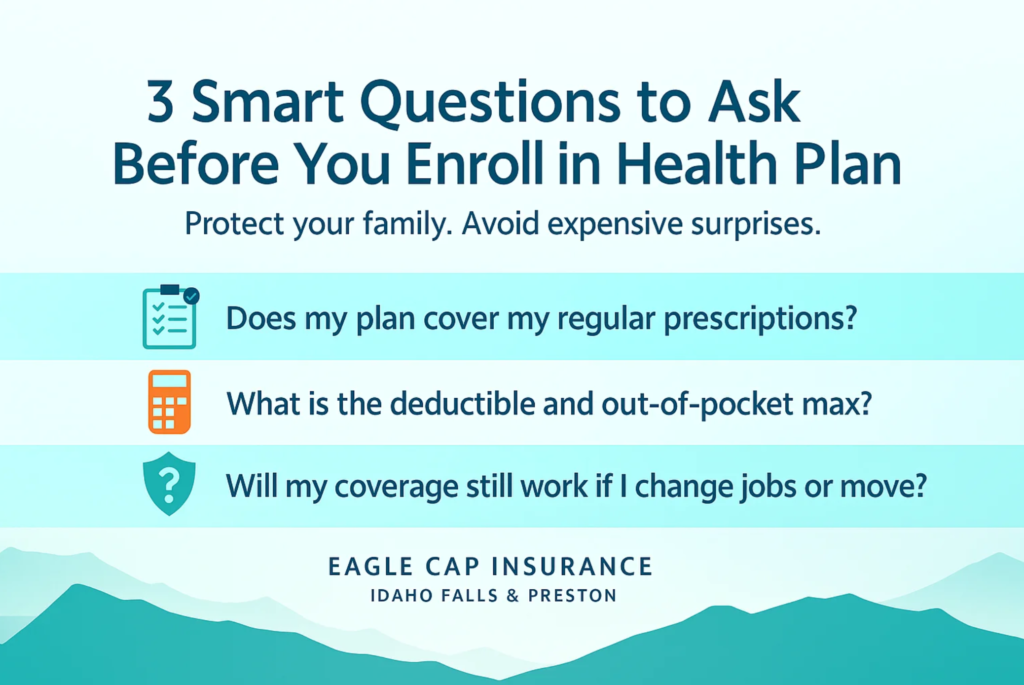
If you take regular medications, check each plan’s drug list (formulary) and what tier your prescriptions fall into. Two plans with identical premiums can have wildly different drug costs. This is one of the most common sources of surprise bills.
A Simple Comparison Checklist
Before you choose, you should be able to answer “yes” to all of these:
- Are my doctors and hospitals in-network?
- Are my prescriptions covered at a reasonable tier?
- Have I compared total annual cost, not just premium?
- Do I know my out-of-pocket maximum?
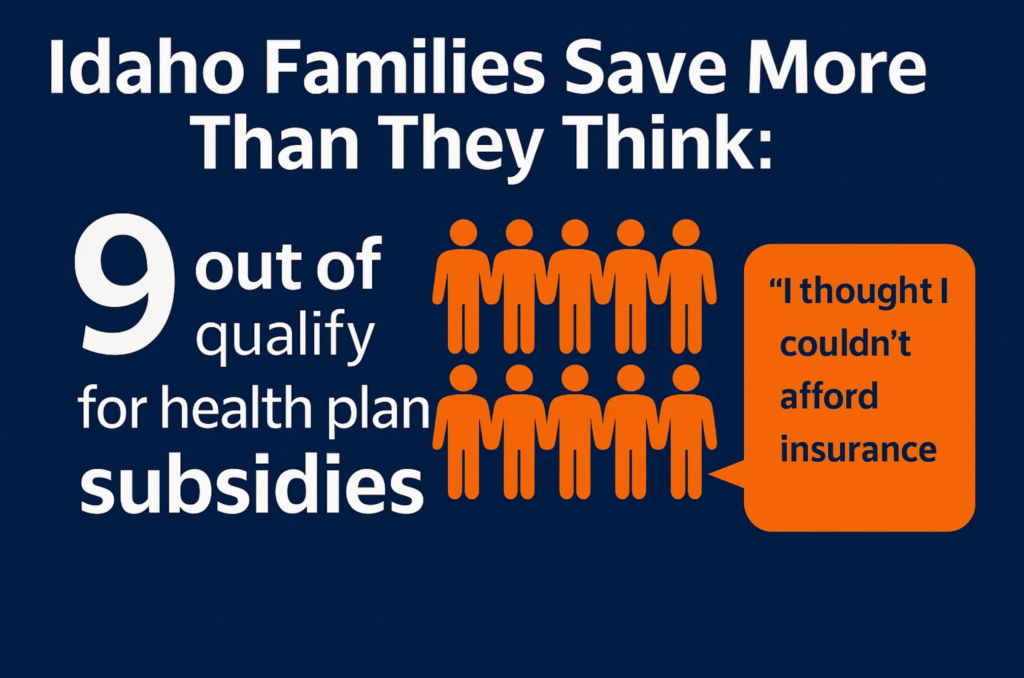
- Have I checked whether I qualify for a subsidy?
If you can’t answer one of these, that’s exactly where an agent helps.

Let Us Run the Comparison for You
This is the core of what an independent agency does. We pull plans from multiple carriers and the Your Health Idaho marketplace, line them up on the numbers that matter to your family, and explain the trade-offs in plain language — at no cost to you.
Call (208) 529-1522 or visit eaglecapinsurance.com and we’ll build a side-by-side comparison for your household — total cost, network, and drug coverage included. No guesswork, no pressure.
Frequently Asked Questions
What is the biggest mistake people make comparing health plans?
Sorting by the lowest monthly premium and stopping there. The cheapest premium often costs the most overall once you add the deductible, copays, and out-of-pocket maximum.
What five numbers should I compare between health plans?
Compare the monthly premium, the deductible, copays/coinsurance, the out-of-pocket maximum, and any premium tax credit. The out-of-pocket maximum is your worst-case ceiling and is often overlooked.
Why does the provider network matter so much?
A plan is only as good as its access to the doctors and hospitals you use. An out-of-network visit can cost far more and may not count toward your deductible, so confirm your providers before choosing.
Should I check prescription coverage when comparing plans?
Yes. Two plans with identical premiums can have very different drug costs depending on each plan's formulary and tiers, which is a common source of surprise bills.
About the author — Kyle Bennett, Principal & Licensed Insurance Agent, Eagle Cap Insurance, Ammon, ID. Kyle helps Idahoans compare plans on real cost and fit, serving eastern Idaho from Idaho Falls (Ammon) and Preston.