




“How much will it cost?” is the first question everyone asks about insurance — and the answer always starts with “it depends.” But it doesn’t depend on mystery; premiums are driven by a specific, knowable set of factors. Once you understand them, you can estimate your cost, spot what’s inflating it, and find legitimate ways to bring it down.
This guide breaks down what drives your premium and how to estimate it.
The Two Halves of Cost
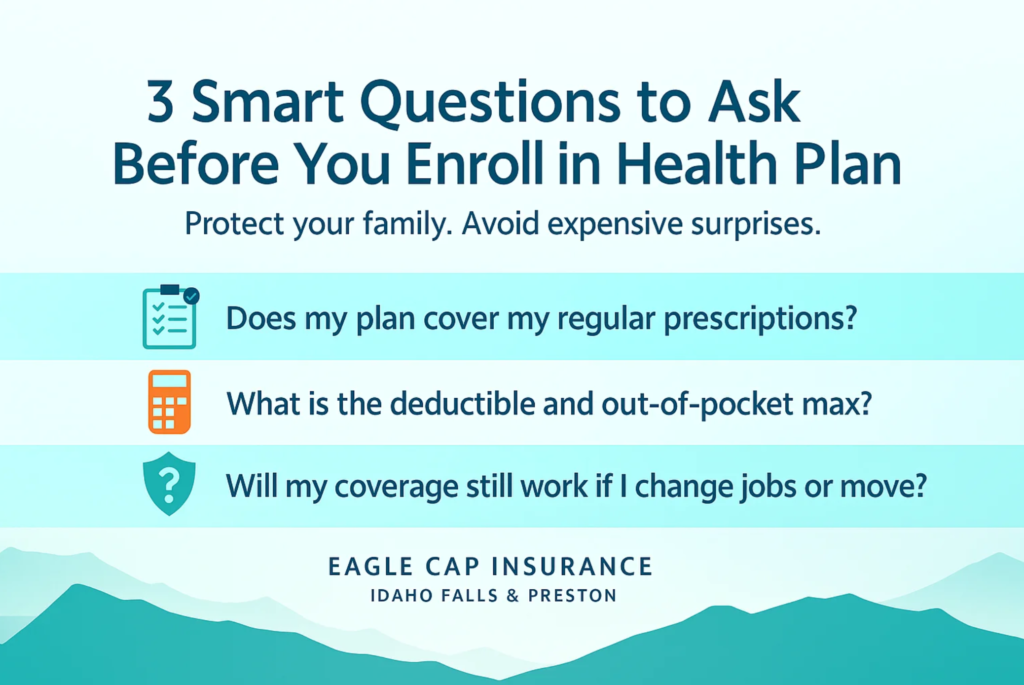
Across most coverage, your true cost has two parts: the premium you pay regularly, and what you pay when you use the coverage (the deductible and other cost-sharing). A low premium with a high deductible isn’t automatically cheaper — it depends on how much you’ll actually use it. Estimating well means looking at both.
What Drives Your Premium
The specific factors vary by line, but the big levers are:
- Age — affects health and life premiums significantly.
- Location — your Idaho area influences rates.
- Coverage amount — higher limits or death benefits cost more.
- Deductible — a higher deductible lowers the premium.
- Risk factors — line-specific items like tobacco use (health/life) or business type and claims history (business).
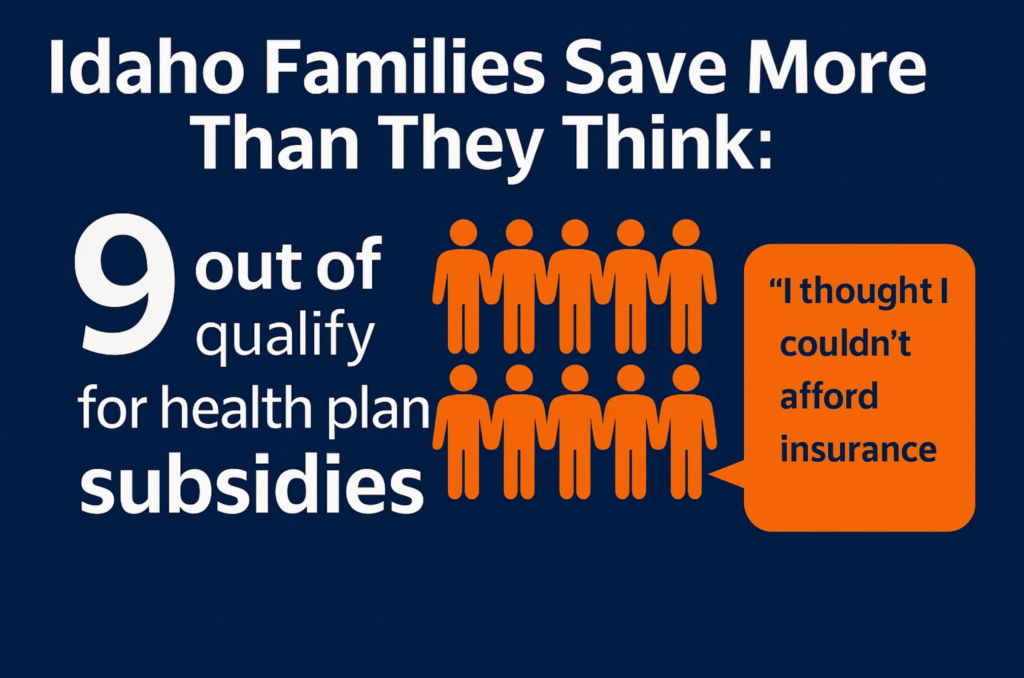
- Income — for health plans, it determines your premium tax credit.

How Cost Works by Coverage Type
- Health — age, county, plan tier, tobacco; offset by income-based subsidies.
- Life — age, health, coverage amount, term vs. permanent; buying younger saves the most.
- Disability — income, occupation, benefit length, and elimination period.
- Business — industry, revenue, payroll, property values, and coverage types.
Estimating Your Cost
To ballpark a premium yourself: identify your core factors (age, location, coverage amount), pick a deductible level, and for health, estimate your income for the subsidy. Then add expected out-of-pocket use to the annual premium for a real total. It’s a useful starting point — but only a starting point.
Why a Personalized Quote Beats an Estimator
Online calculators use generic assumptions and miss what actually moves your number: your specific providers and prescriptions, your exact subsidy, bundling discounts, and carrier-by-carrier differences. A personalized quote reflects your real price — not an average. We pull real quotes across carriers so the figure you see is the one you’d pay.

Ways to Lower Your Premium
- Right-size your deductible — raise it only if you can absorb it.
- Bundle coverage where it earns a discount.
- Capture every discount and subsidy you qualify for.
- Improve risk factors where you can (e.g., tobacco-free rates).
- Re-shop periodically — the market changes, and so should your plan.
Frequently Asked Questions
What factors affect my insurance premium the most?
It varies by coverage type, but common drivers include age, location, the coverage amount and deductible, and risk factors specific to the line (health, life, business). For health plans, income also determines any subsidy.
Why are online insurance estimates often inaccurate?
Online estimators use generic assumptions and miss your specifics, such as your providers, prescriptions, subsidy eligibility, and available discounts. A personalized agent quote reflects what you’d actually pay.
How can I lower my insurance premium?
Options include choosing a higher deductible if you can absorb it, bundling policies, capturing all discounts, improving relevant risk factors, and for health plans, claiming any premium tax credit you qualify for.
Does a higher deductible always save money?
It lowers your premium, but you take on more cost if you file a claim. It’s a good trade only if you can comfortably cover the higher deductible. We help you weigh the total expected cost, not just the premium.
Call (208) 529-1522 or visit eaglecapinsurance.com/contact for a free, personalized estimate across multiple carriers — with the real cost factors and any discounts or subsidies you qualify for, factored in.
About the author — Kyle Bennett, Principal & Licensed Insurance Agent, Eagle Cap Insurance, Ammon, ID. Kyle is a licensed independent insurance agent and the principal of Eagle Cap Insurance, helping Idahoans understand and lower their insurance costs, serving eastern Idaho from Idaho Falls (Ammon) and Preston.